

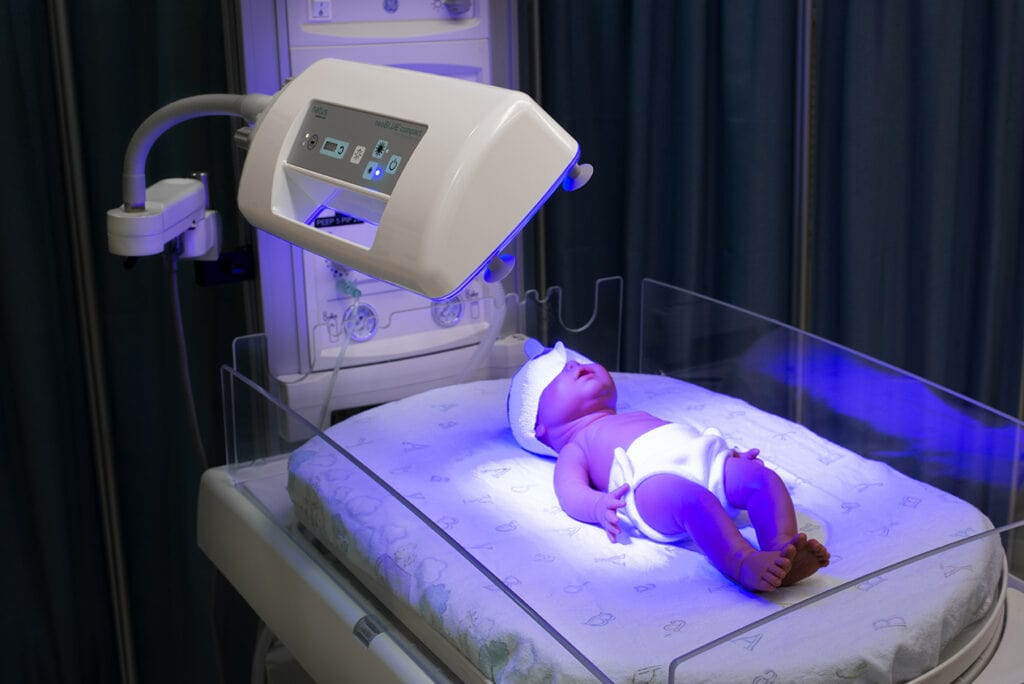
Phototherapy Procedure Newborn
Understanding Newborn Jaundice and Why Quick Action Matters
Seeing your newborn’s skin turn yellow can be alarming for any parent. Neonatal jaundice affects nearly 60% of full-term babies and 80% of premature infants in their first week of life. While often harmless, elevated bilirubin levels require prompt treatment to prevent serious complications like kernicterus, which can cause permanent brain damage.
The good news? Phototherapy has been the gold standard treatment for over five decades, safely treating millions of babies worldwide. Even better news? You may not need to keep your baby hospitalized to receive this essential care.
What Is Phototherapy and How Does It Work?
Phototherapy uses special blue or white LED lights to break down excess bilirubin in your baby’s blood. When light of specific wavelengths (typically 460-490 nm) penetrates your baby’s skin, it converts bilirubin into a water-soluble form that can be easily eliminated through urine and stool.
The process is completely painless and non-invasive. Your baby simply rests under or on the phototherapy lights, wearing protective eye shields, while the treatment does its work. Most cases show significant improvement within 24-48 hours of continuous treatment.
Hospital vs. Home Phototherapy: What Parents Need to Know
Traditional Hospital Treatment
Hospitals across major cities, including Hyderabad, Pune, Mumbai, Bengaluru, and Kolkata, offer excellent phototherapy services in their neonatal intensive care units (NICUs). Top facilities like Belle Vue Clinic, AMRI Hospitals, Apollo Gleneagles Hospital, and others provide round-the-clock monitoring and expert care.
However, hospital-based treatment comes with challenges:
- An extended separation from your newborn during a crucial bonding period
- Higher costs from hospital room charges and extended stays
- Exposure to hospital environments and potential infections
- Stress and inconvenience for the entire family
- Difficulty for mothers recovering from delivery to stay by their baby’s side
Home Phototherapy: The Comfortable Alternative
Medical-grade phototherapy equipment rental brings hospital-quality treatment to your home, offering remarkable advantages:
For Your Baby:
- Continuous skin-to-skin contact and bonding with parents
- Familiar, comfortable environment reducing stress
- Ability to breastfeed on demand, which helps flush bilirubin naturally
- Lower risk of hospital-acquired infections
- Gentler transition during the critical first weeks of life
For Your Family:
- Mother can recover from delivery in comfort at home
- No overnight hospital stays or visitor restrictions
- Siblings can meet the new baby safely
- Significant cost savings compared to hospital charges
- 24/7 professional guidance and monitoring support
- Flexibility to maintain your family routine
Is Home Phototherapy Right for Your Baby?
Home phototherapy is suitable for many babies with mild to moderate jaundice, typically when:
- Bilirubin levels are elevated but not critically high
- Your baby is feeding well and gaining weight
- Your baby was born at or near full term (37+ weeks)
- There are no other serious medical complications
- You have healthcare professional guidance and monitoring
Your pediatrician will assess your baby’s specific condition and bilirubin levels to determine if home phototherapy is appropriate. Many doctors now actively recommend home-based treatment for eligible cases due to the proven benefits for both the baby and the family.
What to Expect with Phototherapy Equipment Rental
Professional-Grade Equipment
Rental phototherapy units are the same medical-grade devices used in hospitals, featuring:
- High-intensity blue LED lights for maximum effectiveness
- Adjustable intensity settings as prescribed by your doctor
- Built-in timers and safety features
- Comfortable bassinet or overhead light configurations
- Protective eye shields and positioning aids
Complete Support Package
Reputable phototherapy rental services provide:
- Equipment delivery and setup at your home
- Detailed training on proper use and safety protocols
- 24/7 technical support and emergency helpline
- Regular monitoring, guidance, and bilirubin tracking tools
- Coordination with your pediatrician for optimal treatment
- Flexible rental periods based on treatment duration
- Equipment pickup after treatment completion
The Treatment Process
- Initial Assessment: Your pediatrician diagnoses jaundice and prescribes phototherapy
- Equipment Delivery: Medical-grade phototherapy unit delivered to your home within hours
- Setup & Training: The healthcare professional sets up the equipment and trains you on its usage
- Treatment Period: Your baby receives 16-24 hours of daily phototherapy as prescribed
- Monitoring: Daily bilirubin checks through heel prick tests or transcutaneous monitoring
- Follow-up: Regular pediatrician consultations to track progress
- Completion: Equipment collected once bilirubin levels normalize
Safety First: Essential Guidelines for Home Phototherapy
While phototherapy is remarkably safe, following these guidelines ensures optimal results:
- Eye Protection: Always ensure eye shields are properly positioned during treatment
- Skin Exposure: Maximize skin exposure by keeping the baby in just a diaper
- Hydration: Offer frequent breastfeeding or formula to prevent dehydration
- Temperature: Monitor room temperature to prevent overheating or chilling
- Positioning: Change the baby’s position regularly for even light exposure
- Monitoring: Track wet diapers, feeding patterns, and overall behavior
- Communication: Stay in regular contact with your healthcare provider
The Evidence Behind Home Phototherapy
Multiple clinical studies have confirmed that home-based phototherapy is equally effective as hospital treatment for appropriate cases. Research published in major pediatric journals demonstrates that babies treated at home show the following:
- Similar or faster bilirubin reduction rates
- Better feeding patterns due to on-demand breastfeeding
- Improved parent-infant bonding outcomes
- Lower family stress levels
- No increase in readmission rates when properly monitored
Healthcare systems worldwide, including in the UK, Australia, and across Europe, have successfully implemented home phototherapy programs, treating thousands of babies safely and effectively.
Why Choose Professional Phototherapy Equipment Rental?
Quality Assurance
- Hospital-grade, calibrated equipment with verified light output
- Regular maintenance and safety inspections
- Compliance with medical device regulations
- Proven effectiveness in treating jaundice
Expert Support
- Guidance from trained healthcare professionals
- Connection with pediatric specialists
- Emergency support availability
- Evidence-based treatment protocols
Convenience & Comfort
- Quick delivery across major cities (Hyderabad, Pune, Mumbai, Bengaluru, Kolkata)
- Hassle-free setup and collection
- Flexible rental periods
- Transparent pricing with no hidden charges
Peace of Mind
- Treat your baby while staying together as a family
- Professional equipment you can trust
- Continuous support throughout treatment
- Proven track record of successful outcomes
Preventing Complications: The Importance of Timely Treatment
Untreated jaundice can lead to serious complications:
- Acute Bilirubin Encephalopathy: High bilirubin affects brain function, causing lethargy, poor feeding, and abnormal muscle tone
- Kernicterus: Permanent brain damage from prolonged high bilirubin, potentially causing cerebral palsy, hearing loss, vision problems, and developmental delays
- Dehydration: Severe jaundice can interfere with feeding, leading to weight loss and dehydration
These complications are entirely preventable with prompt phototherapy treatment. Whether in hospital or at home, the key is starting treatment quickly when bilirubin levels rise above safe thresholds.
Taking Action: Your Next Steps
If your baby has been diagnosed with jaundice requiring phototherapy, you have options. Consider these steps:
- Consult Your Pediatrician: Discuss whether home phototherapy is suitable for your baby’s condition
- Research Rental Services: Look for reputable providers with medical-grade equipment and proper support
- Understand the Process: Ask about delivery times, setup procedures, and monitoring protocols
- Verify Equipment Quality: Ensure the rental unit meets medical standards and is properly calibrated
- Plan for Monitoring: Arrange for regular bilirubin checks through home visits or clinic appointments
- Prepare Your Home: Designate a comfortable, temperature-controlled space for treatment
Frequently Asked Questions
How long does phototherapy treatment typically last? Most babies require 2-4 days of continuous phototherapy, though some cases may need longer treatment. Your pediatrician will monitor bilirubin levels and determine the appropriate duration.
Can I breastfeed during phototherapy? Absolutely! In fact, frequent breastfeeding is encouraged, as it helps flush bilirubin from your baby’s system. You can temporarily remove your baby from the lights for feeding sessions.
Is phototherapy safe for my newborn? Yes, phototherapy has been used safely for over 50 years. The most common side effects are minor and temporary, including loose stools, mild skin rashes, or slight dehydration (prevented by frequent feeding).
What if bilirubin levels don’t improve? Your healthcare team will monitor progress daily. If levels don’t respond adequately to phototherapy, your doctor may recommend hospital admission for intensive phototherapy or other treatments.
Can phototherapy cause skin damage or sunburn? No, the blue light used in phototherapy doesn’t contain harmful UV rays and won’t cause sunburn or long-term skin damage.
Your Baby’s health is our priority.
Newborn jaundice is treatable, and phototherapy is a proven solution. With modern medical equipment rental services, you can provide your baby with effective treatment while maintaining the precious bond and comfort of being together at home.
Don’t let jaundice create unnecessary separation during your baby’s crucial first days. Explore professional phototherapy equipment rental options today and give your newborn the best of both worlds: hospital-quality medical care in the loving environment of home.
Ready to Learn More About Phototherapy Equipment Rental?
Contact us today to discuss:
- Equipment availability in your city
- Treatment protocols and medical support
- Rental pricing and package options
- Coordination with your pediatrician
- Quick delivery and setup services
Your baby deserves the best care, and your family deserves to stay together. Let us help you make that possible with safe, effective, and convenient home phototherapy solutions.
Call now or request a callback to speak with our medical equipment specialists.
UV Light for Newborn Jaundice
UV light for newborn jaundice is a widely used treatment to lower high bilirubin levels in infants. This newborn condition causes yellowing of the skin and eyes from excess bilirubin. Blue UV light therapy helps break down bilirubin for easy excretion by the baby. This non-invasive treatment is typically applied for several hours each day until the jaundice subsides. UV light for newborn jaundice is a safe, effective, and essential method to ensure the baby’s healthy recovery.